The Challenge
Orquestra Moderna set out to make classical music young and accessible, with short, thematic concerts structured around parts of the human body (eyes, lungs, mouth, ears) and music chosen specifically for each theme. The experience was synesthetic: felt as much as heard. Running in parallel was Escuta Ativa, a chamber orchestra of deaf teenagers who learned and performed through vibration, using instruments fitted with balloons to feel the resonance of the sound, on the same stage and to the same audience. I needed one identity flexible enough to hold both, a contemporary, joyful, radically accessible orchestra and a sensitive, inclusive education project, without either feeling like an afterthought.
My Process
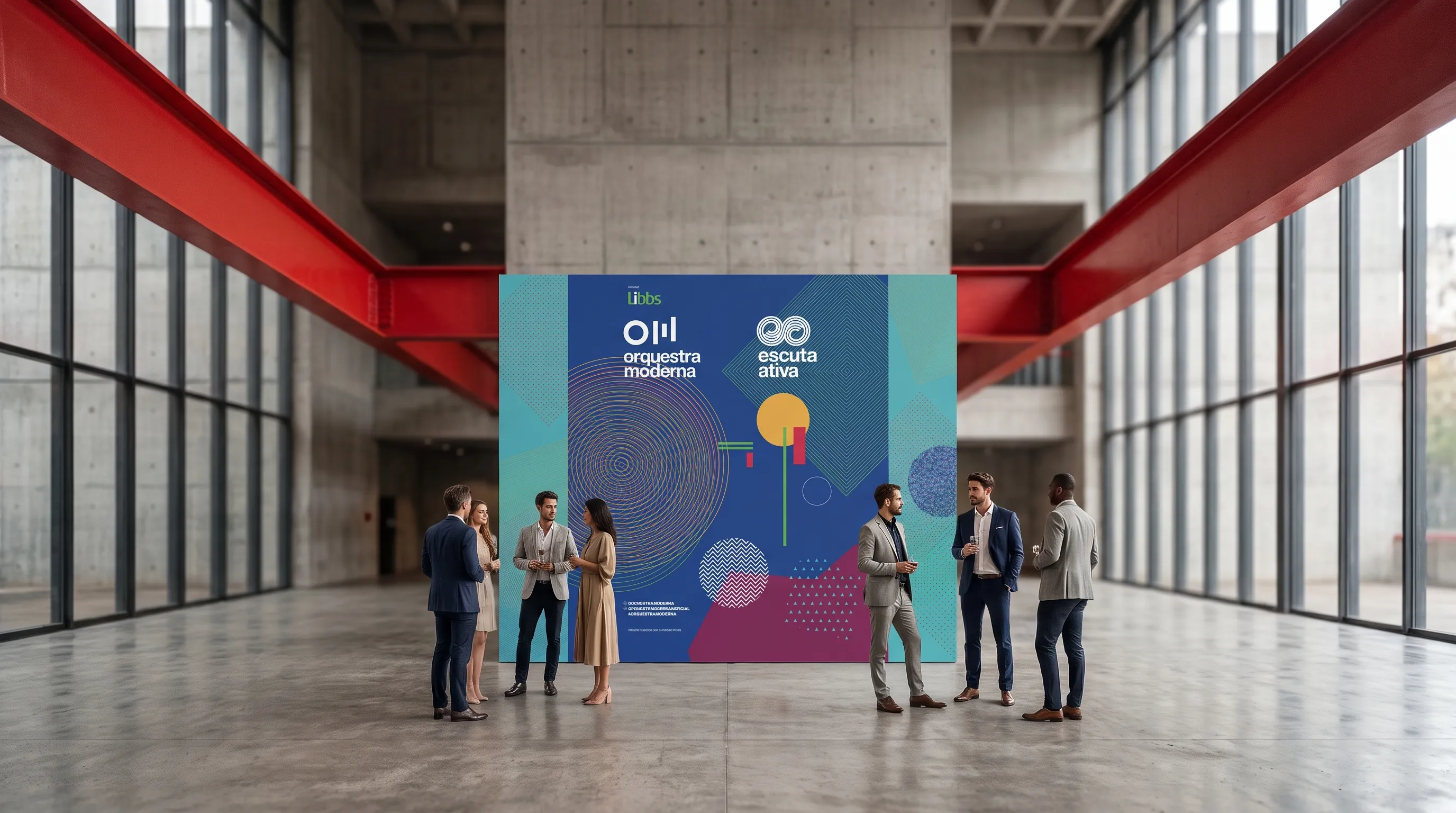
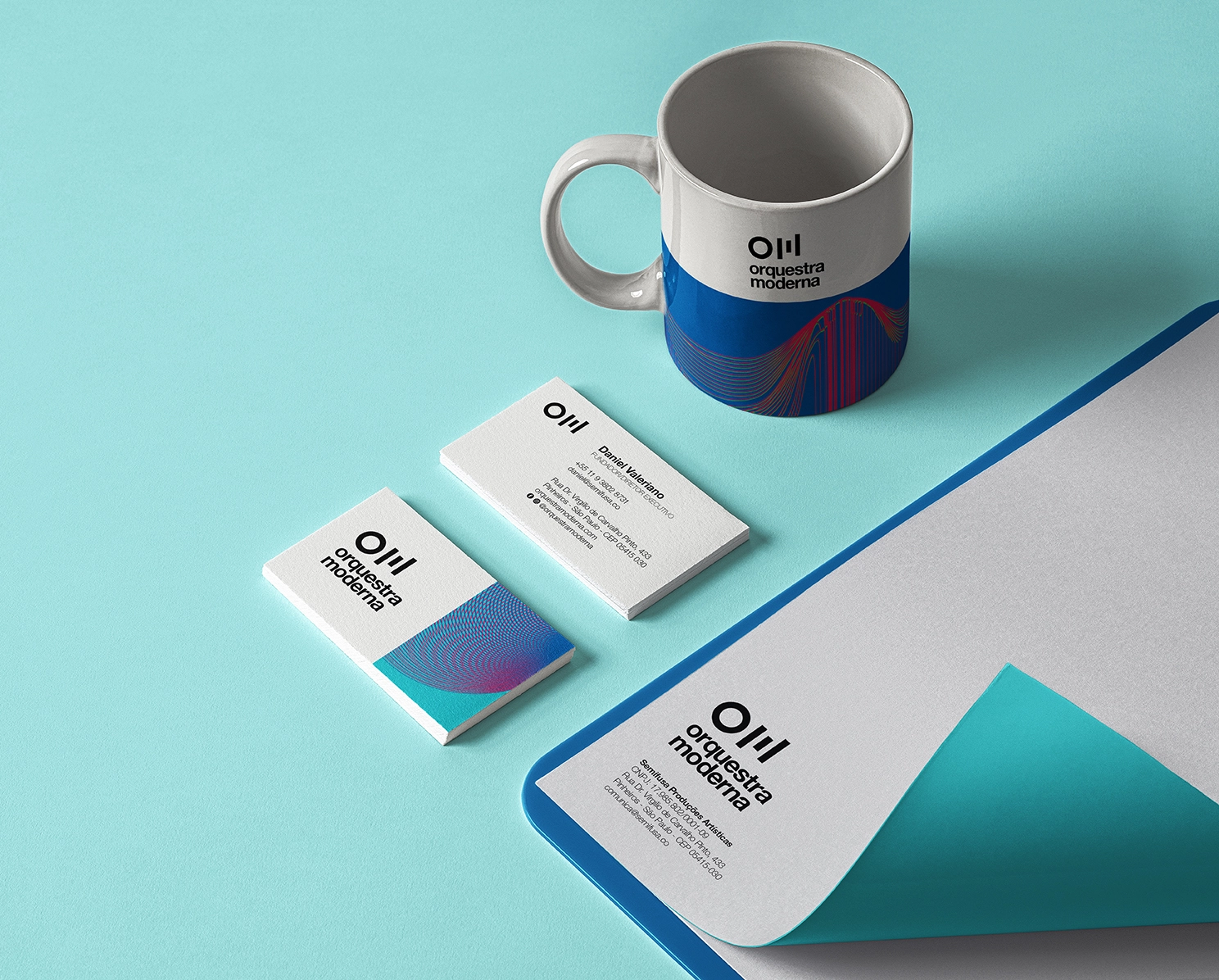
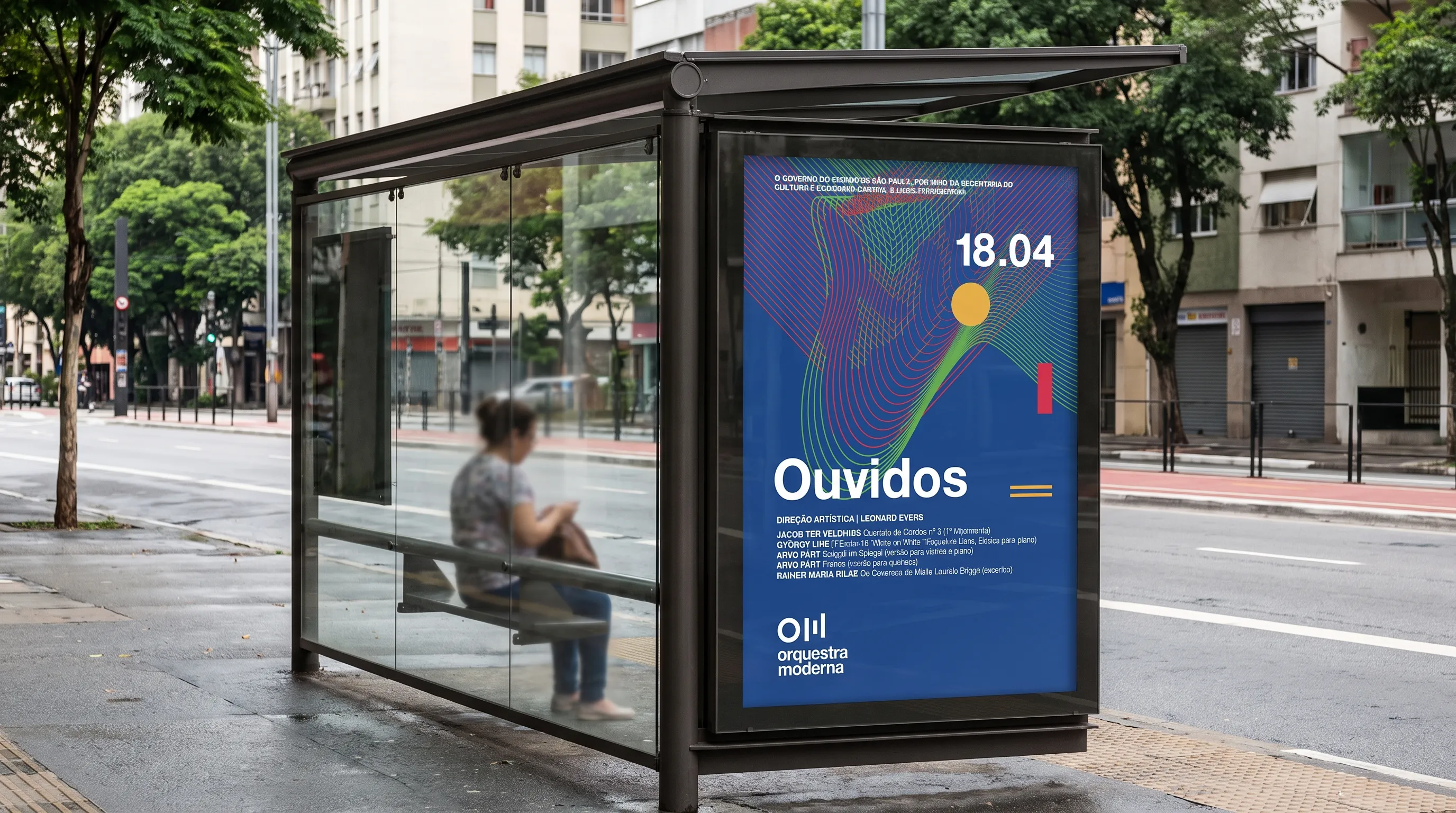
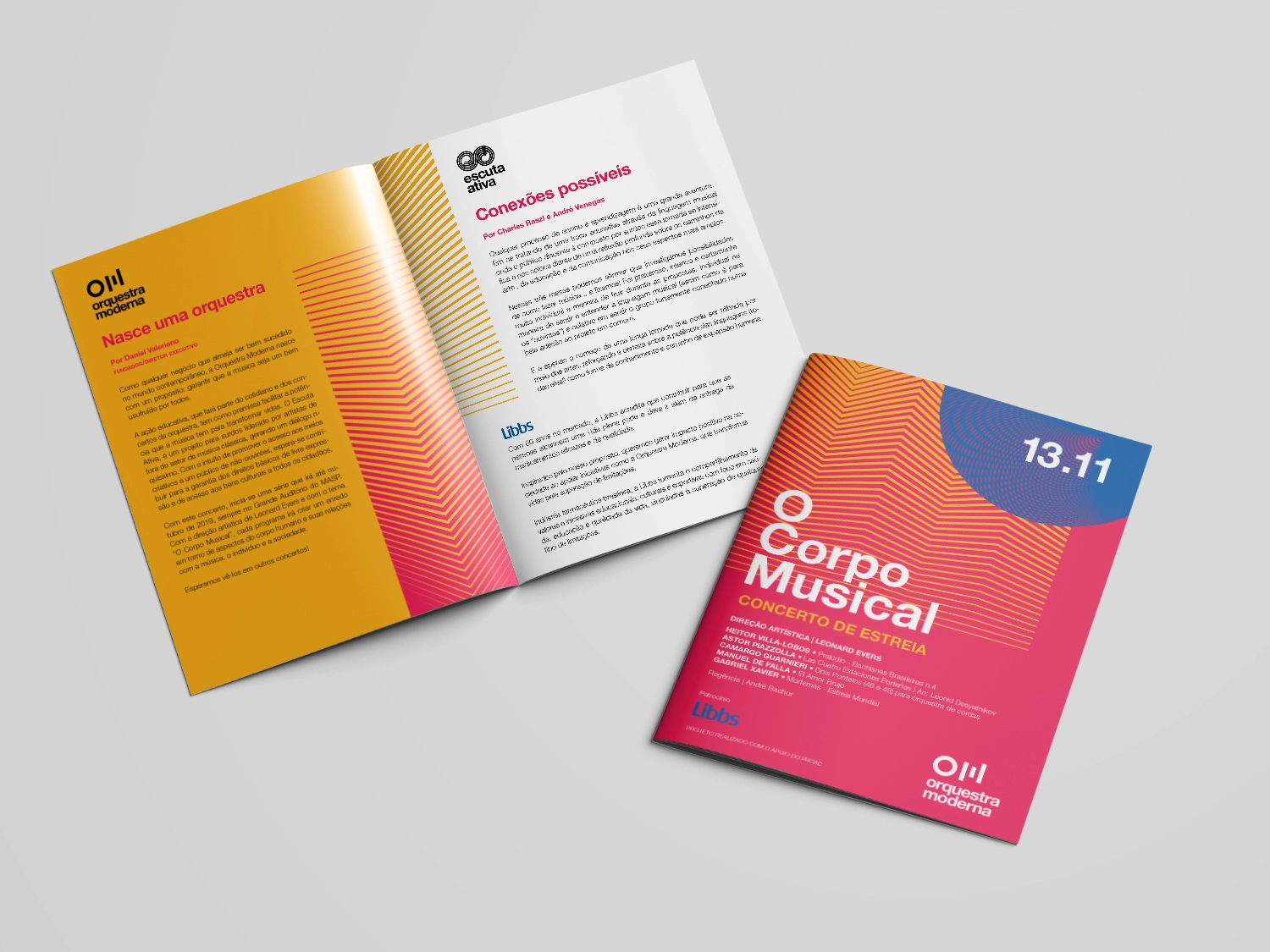
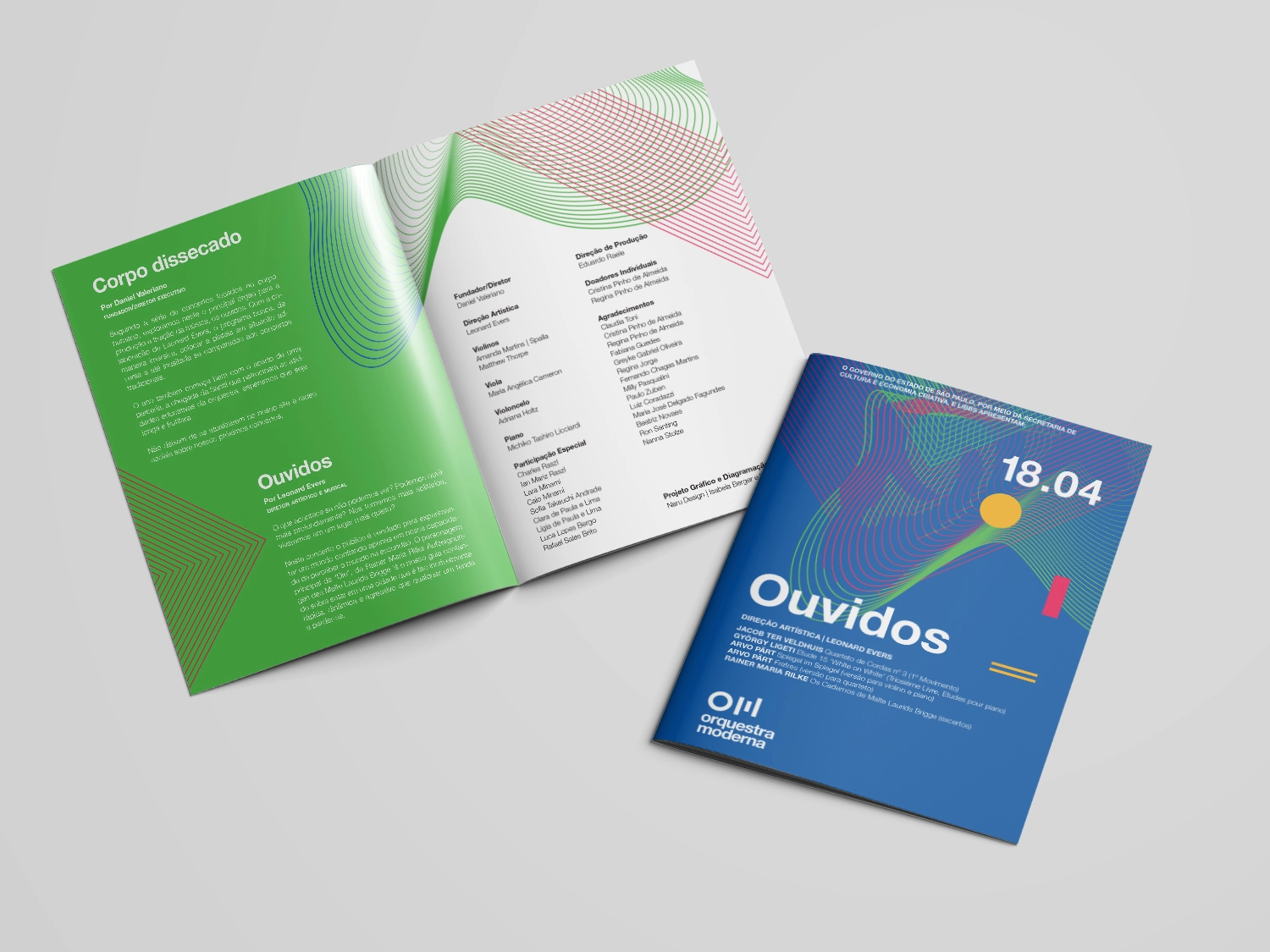
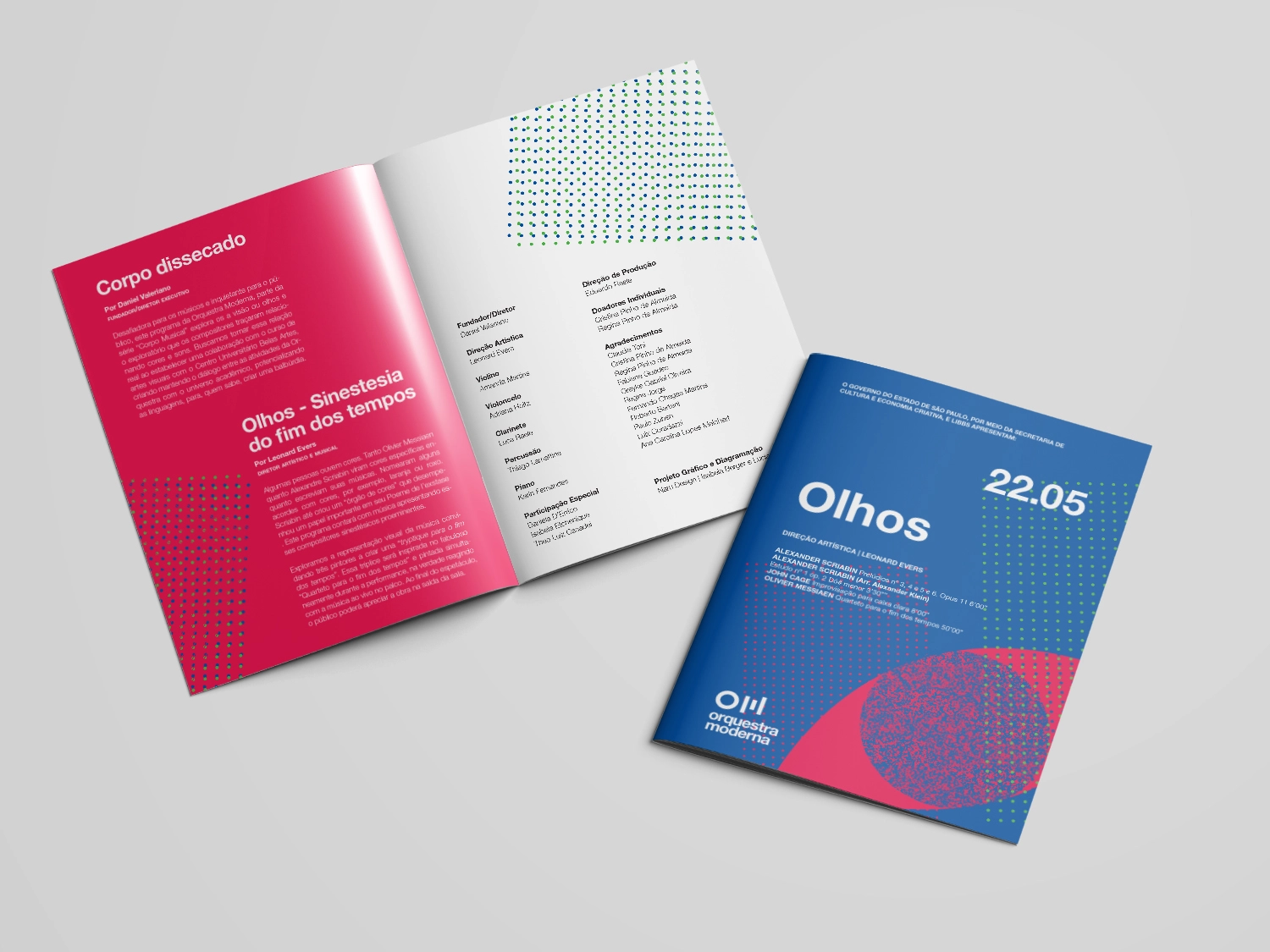
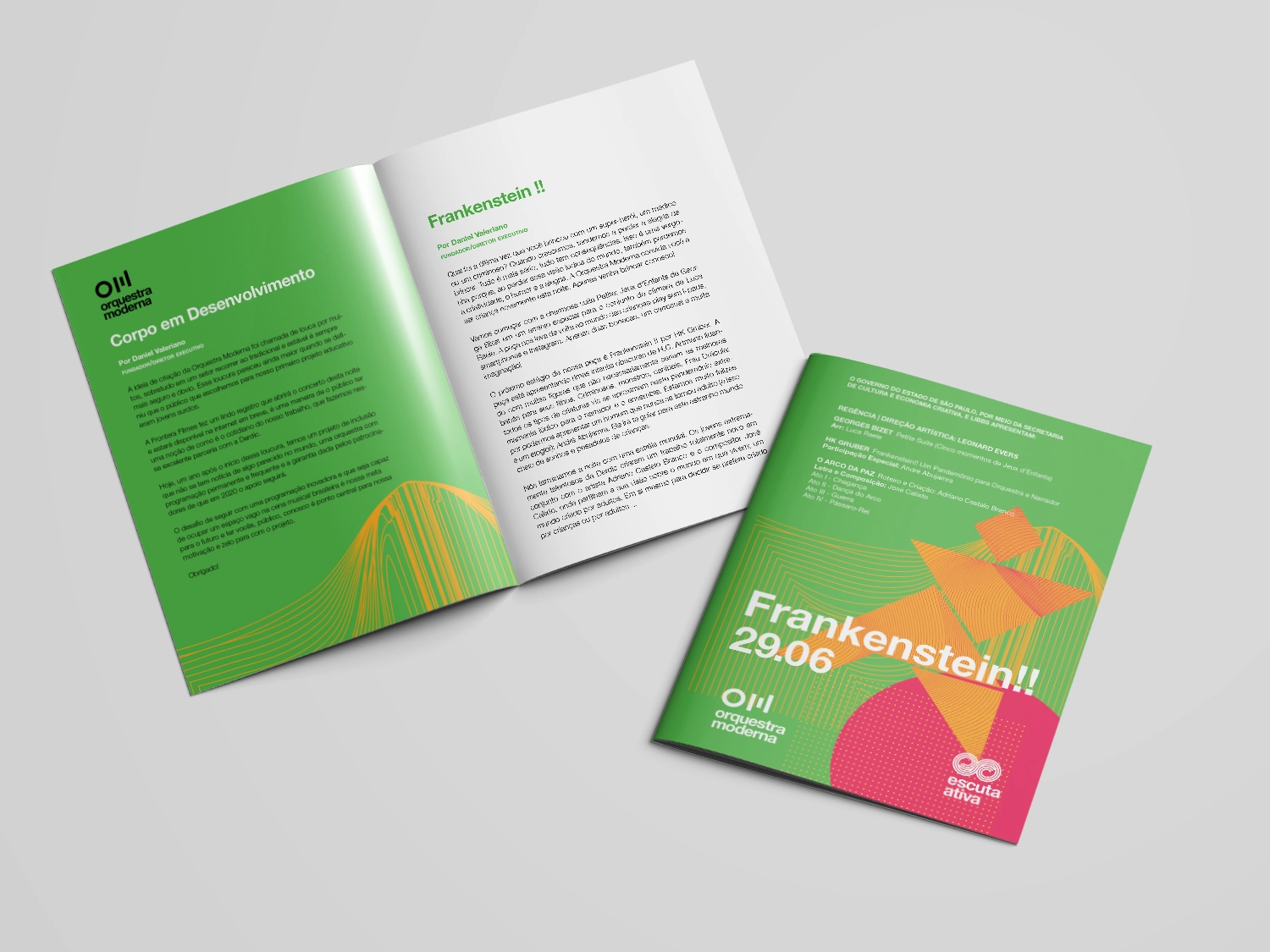
As Creative Director at Naru with a team of three, I built the whole visual system from sound waves, the common root of every kind of music. Sound moves in waves, overlaps, and creates interference patterns, and that became the visual logic: lines and shapes layered and overlapping, shifting across applications and themes, anchored by a vibrant palette. The logo stayed minimal and direct on purpose, holding back so the expressive system could carry each themed concert. Escuta Ativa became a distinct identity within the same system, with the shared logic of waves and overlap making the connection visible.
Key Decisions
Build from sound itself. Basing the system on sound waves rather than any one genre or instrument gave it a root that worked for both a contemporary concert series and a project about feeling music through vibration. Vibration became structural logic, not decoration.
A minimal logo in service of maximum expression. Keeping the mark clean and building expressive range into the surrounding system let each concert have its own character while the brand stayed recognisable across the whole season.
Results
Nine monthly concerts at MASP, one of Brazil's most important cultural institutions, across a full season. Programming and identity worked in productive tension: the venue lent prestige, the brand refused elitism. Both orchestras performed to the same audience on the same stage, and Escuta Ativa became the proof of concept: music as something everyone can experience, regardless of how they receive it.
What Made This Different
This is brand thinking applied to cultural access: not making music look inclusive, but building an identity that could actually hold an inclusive idea. It's the same range I bring to mission-driven work now: strategy that flexes without losing itself.
Other projects